Free Sketch Wildlife Icons: High-Quality Vector & Raster Downloads for Designers and Educators
Whether you're designing an eco-conscious app interface, crafting a nature-themed classroom poster, or building a wildlife conservation website, free sketch wildlife icons offer unmatched versatility and artistic charm. These hand-drawn, monochrome icons—featuring forest animals, outdoor animals, and other wildlife subjects—are more than just decorative elements. They’re functional, scalable, and deeply expressive design assets rooted in authenticity and natural storytelling.
What Exactly Is a Sketch Wildlife Icon?
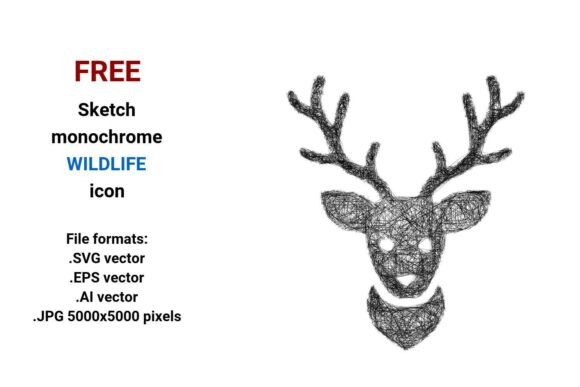
A sketch wildlife icon is a simplified, artistic representation of an animal—like a fox, owl, deer, or bear—rendered in a sketch style: loose lines, subtle texture, visible pencil or pen strokes, and intentional imperfection. Unlike photorealistic or flat-design icons, these embrace hand-drawn, freehand, and rough qualities that evoke curiosity, warmth, and organic connection to nature.
Crucially, the term “sketch style icon” doesn’t mean low fidelity—it means high intention. Each line communicates movement, habitat, and character. A sketch wildlife button, for instance, might guide users toward a “Learn About Forest Animals” section with visual clarity and emotional resonance—making it both a UI element and a storytelling tool.
Why Vector Format Matters: SVG, EPS, and AI Files Explained
These free icons come in four essential formats: .SVG, .EPS, .AI, and .JPG (5000×5000 pixels). Understanding their differences ensures you choose the right file for your project—and avoid common pitfalls like pixelation or editing limitations.
- .SVG (Scalable Vector Graphics): The web standard for responsive, lightweight vector icons. Perfect for websites, apps, and digital interfaces. SVGs scale infinitely without quality loss and support CSS styling, animation, and accessibility attributes—ideal for web sketch icon use cases.
- .EPS (Encapsulated PostScript): A legacy but still widely supported vector format, especially in print workflows. Great for large-format posters, brochures, or merchandising where precise color separation and compatibility with older design software matter.
- .AI (Adobe Illustrator): Fully editable native files. If you need to tweak anchor points, adjust stroke weight, recolor paths, or integrate the icon into a larger vector illustration, .AI gives you complete creative control—making it ideal for editable sketch icon projects.
- .JPG (5000×5000 pixels, monochrome): A high-resolution raster version. While not scalable like vectors, this ultra-detailed image works beautifully for print layouts, social media banners, presentations, or situations where vector support isn’t available (e.g., some CMS platforms or email clients).
This multi-format approach reflects modern design needs: interface builders want SVG; educators printing handouts may prefer JPG; illustrators refining compositions rely on AI; and publishers preparing physical materials often request EPS. It’s not redundancy—it’s thoughtful flexibility.
Vector vs. Raster: A Quick Reality Check
Let’s clarify a frequent misconception: “All icons are the same—just smaller or bigger.” Not true. A vector image is built from mathematical equations defining points, lines, curves, and fills. That’s why it stays razor-sharp at any size—from a 16-pixel favicon to a 10-foot mural. In contrast, raster images like JPGs are grids of fixed pixels. Enlarge them too much, and they blur or pixelate.
So while the 5000×5000 JPG offers stunning detail, it’s best used *at or below* its native resolution. For anything requiring scaling—like responsive websites, mobile UIs, or adaptable educational materials—the vector image versions (.SVG, .EPS, .AI) are indispensable.
Practical Uses Across Industries and Everyday Life
These free sketch wildlife icons serve far more than aesthetic purposes. Their outline-based, monochrome simplicity makes them highly legible, accessible, and adaptable across contexts:
- Educators use forest animals icon sets to label classroom charts, create flashcards, or illustrate food webs—helping students connect abstract concepts to tangible, memorable visuals.
- UX/UI designers integrate sketch wildlife button elements into nature-focused apps (e.g., bird-watching guides, park trail maps, or citizen science tools), where intuitive, friendly iconography improves engagement and reduces cognitive load.
- Nonprofits and conservation groups deploy outdoor animals icon graphics in infographics, donation pages, and awareness campaigns—leveraging the emotional honesty of hand drawn icon art to humanize complex ecological issues.
- Small business owners feature sketch wildlife icon art on eco-friendly packaging, tote bags, or workshop signage—communicating values like sustainability and craftsmanship without heavy branding.
- Students and hobbyists remix these creative sketch icon assets in school projects, zines, or personal blogs—practicing visual communication while respecting open licensing.
Design Principles Behind the Sketch Style
Why does sketch-style iconography resonate so strongly? Because it honors three timeless principles:
- Authenticity: Rough, visible strokes suggest human presence—reminding viewers that nature isn’t sterile data, but lived experience.
- Simplicity: By stripping away photorealism, sketch icons emphasize form, gesture, and habitat context—perfect for quick recognition in busy interfaces.
- Adaptability: Monochrome sketchy line icon designs work across color schemes, backgrounds, and devices—no worrying about clashing hues or transparency issues.
Think of a deer outline icon in a forest-themed navigation bar: its minimal curves convey grace and alertness instantly. Or a fox sketch icon on a children’s app—its tilted head and expressive ears spark imagination far more than a rigid geometric shape could.
How to Use These Icons Responsibly and Effectively
Since these are free resources, ethical usage matters. Always check the license (most sketch wildlife icon packs are CC0 or MIT-licensed), and when possible, credit the creator—even informally. Beyond legality, consider context:
- Avoid overloading interfaces: Too many detailed sketch icons can compete for attention. Pair them with clean typography and generous whitespace.
- Test for accessibility: Ensure sufficient contrast between icon lines and background—especially important for users with low vision. Monochrome doesn’t mean invisible.
- Customize thoughtfully: With .AI or .SVG files, adjust stroke width, spacing, or grouping—but preserve the original sketch’s expressive rhythm. Don’t “over-smooth” the hand-drawn feel.
- Match tone to audience: A playful sketch illustration of squirrels fits a kindergarten app; a more refined, technical wildlife drawing may suit a university ecology course.
Final Thoughts: More Than Just Icons—Tools for Connection
In a world saturated with polished, algorithm-driven visuals, free sketch wildlife icons stand out—not because they’re trendy, but because they’re human. They invite participation, spark inquiry, and quietly reinforce our relationship with the living world. Whether you’re a developer embedding a forest animals button into a trail-finder map, a teacher illustrating a lesson on outdoor animals, or a designer choosing a web sketch icon that feels both professional and warm—you’re not just selecting graphics. You’re curating meaning.
And with four flexible formats—.SVG vector, .EPS vector, .AI vector, and .JPG 5000×5000 pixels—you’re empowered to bring that meaning to life, clearly and confidently, across every medium. So download, experiment, adapt, and let these artistic sketch icon assets help tell stories that matter—about wildlife, nature, and the enduring wonder of the wild.