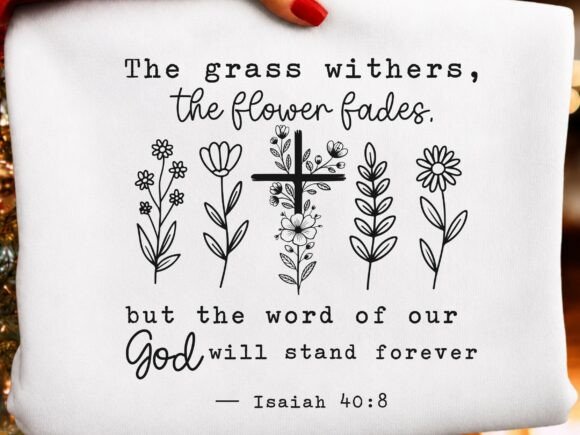
Floral Christian SVG & Faith SVG: What You Really Need to Know Before Downloading
If you're designing faith-based apparel, church event crafts, or Christian home decor, a well-crafted Floral Christian SVG or Faith SVG can elevate your project instantly. These aren’t just decorative files—they’re versatile digital assets designed for precision cutting, high-fidelity printing, and thoughtful visual storytelling. But not all SVGs deliver what they promise. Many creators—especially beginners—assume “SVG” means universal compatibility, crisp scaling, or ready-to-use layers. That’s where expectations often misalign with reality.
Common Misconceptions That Cost Time and Quality
One frequent mistake is assuming every Floral Christian SVG works flawlessly across all machines and software. In truth, some files lack proper grouping, contain embedded raster images (not vectors), or use unsupported fonts converted poorly—or not at all. When you load such a file into Cricut Design Space or Silhouette Studio, you might see missing elements, jagged edges, or uneditable text. Worse, it could fail silently during sublimation prep or vinyl cut registration—leading to wasted blanks, ink, or hours reworking layers.
Another overlooked detail? File resolution isn’t about the SVG itself—it’s about the included PNG and EPS versions. A “300 DPI transparent background PNG” sounds professional, but if the original vector wasn’t built at sufficient scale or with clean paths, the raster output will blur or pixelate when enlarged for wall art or large-format prints. Similarly, DXF files meant for CNC or laser engraving require precise closed paths and no overlapping nodes—yet many sellers include DXFs generated via automated export, not manual cleanup.
Why Format Variety Matters—And How to Use It Right
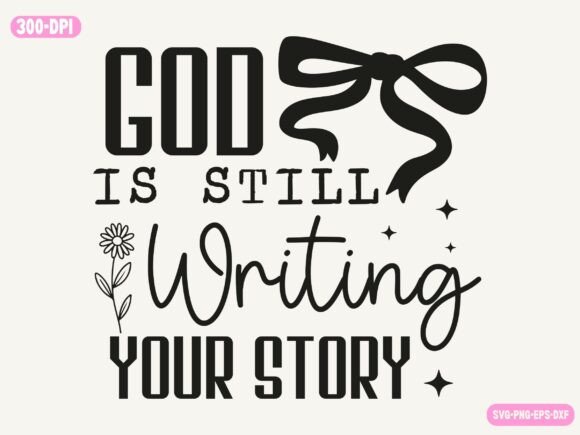
The inclusion of SVG, PNG (300 DPI, transparent background), EPS, and DXF isn’t just marketing fluff—it reflects real-world workflow needs. Here’s how each format serves a purpose:
- SVG: Best for Cricut, Silhouette, and web-based design tools. Choose files with layered groups (e.g., “floral frame,” “scripture text,” “border accents”) so you can hide, recolor, or resize parts independently.
- PNG (300 DPI, transparent): Ideal for sublimation on mugs, tumblers, or phone cases—and for digital mockups. Verify transparency by opening the PNG in a basic viewer; gray-and-white checkerboards should show through cleanly, with no white halos or fuzzy edges.
- EPS: Preferred for professional print shops using Adobe Illustrator. Ensure it opens without font substitution warnings—and that strokes are outlined, not live text.
- DXF: Critical for CNC routers or laser cutters. Test it first in your machine’s software: look for open paths, duplicate lines, or tiny stray points that cause double-cutting or stalling.
Skipping this verification step is like buying paint without checking the color swatch—you won’t know it’s off until it’s too late.
What to Check Before You Click “Download”
Before purchasing any Faith SVG, scan the product description for these practical signals of quality:
- Layer labeling: Are group names descriptive (“vintage cross,” “scripture banner,” “floral wreath bottom”) rather than generic (“layer_1,” “group_2”)? Clear naming saves editing time.
- Stroke vs. fill distinction: Floral elements should use fills—not thin strokes—for clean cutting. Thin outlines may vanish or cut inconsistently on vinyl or heat transfer material.
- Scalability test: Zoom in to 400% in your design software. Do floral details stay sharp? Do intersecting petals retain clean joins? If lines fray or gaps appear, the vector paths likely need refinement.
- Licensing clarity: Does the listing specify personal *and* small business use? Some “commercial use” licenses exclude resale of physical items made from the file—important if you sell faith-themed tote bags or stickers.
A red flag? Vague promises like “high-quality” or “professional design” without concrete details. Trust specifics—not adjectives.
Better Choices for Real Projects
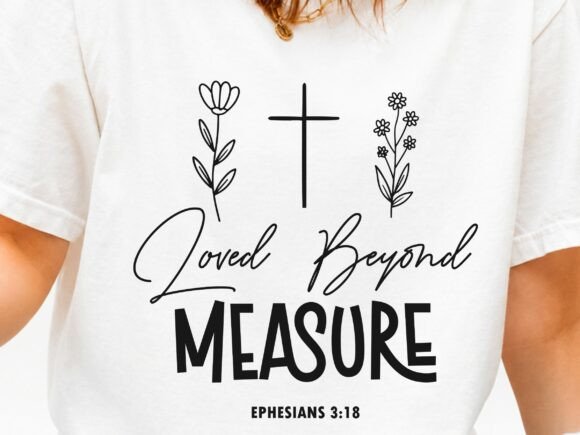
Let’s say you’re making a women’s Bible verse t-shirt with a delicate floral frame around “Trust in the Lord.” A poorly constructed Floral Christian SVG might force you to manually trace over blurry PNGs or rebuild the wreath from scratch. A better approach: choose a file where the floral border is a single, unified compound path—scalable to fit any neckline width—and the scripture text is editable, outlined, or provided as both vector and outlined options.
For church event crafts—like laminated scripture cards or wooden cross ornaments—the DXF matters most. One creator shared how she ordered 50 blank birch crosses, only to discover her DXF had internal “ghost lines” causing the laser to pause mid-cut. She spent two hours cleaning nodes in Inkscape before rerunning the job. A quick pre-check would’ve saved her time—and the cost of re-cutting.
Similarly, educators preparing Sunday school materials benefit from layered SVGs: they can isolate the cross icon for flashcards, keep the floral border for bulletin board headers, and use the full composition for handouts—all from one file.
Final Practical Notes
Remember: Floral Christian SVG and Faith SVG files are tools—not magic. Their value multiplies when matched to your actual workflow, software, and output goals. Don’t default to the cheapest or most colorful option. Instead, ask: Does this file save me time? Will it hold up at 12 inches wide on a canvas? Can I adjust colors without breaking the design?
Also, keep your software updated. Older versions of Silhouette Studio sometimes mishandle gradient meshes or clipping masks common in refined floral designs. If a file seems “off,” try opening it in a newer version—or test it in a free vector editor like Inkscape first.
Lastly, treat your digital library like physical supplies: organize by use case (e.g., “sublimation-ready,” “Cricut-layered,” “wall-art-large-scale”) and note which files include alternate versions of key elements—like simplified florals for smaller cuts or bold fonts for embroidery digitizing.
When you select thoughtfully, a single Faith SVG becomes more than decoration. It becomes reliable, adaptable, and quietly powerful—supporting your message, your craft, and your time.