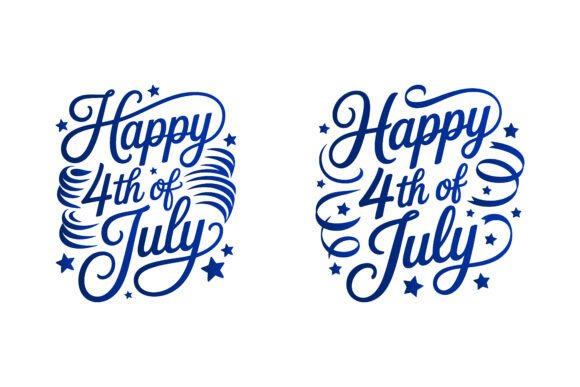
Blue 4th of July Ribbon Art
If you're designing a welcome banner for your neighborhood block party, updating your small business’s social media for Independence Day, or helping third graders craft patriotic cards for veterans — Blue 4th of July Ribbon Art is the kind of versatile, no-fuss vector asset that quietly solves real problems. It’s not just decorative fluff. It’s a practical, editable foundation built for celebration — especially as we approach America’s 250th anniversary in 2026.
What You’re Actually Getting (and Why It Matters)
This isn’t a static PNG you’ll stretch and pixelate when scaling up for a parade float banner. Blue 4th of July Ribbon Art is a fully editable vector design — meaning every curve, loop, and star is mathematically defined, not pixel-based. That translates directly to crisp results whether you’re printing on a 4” gift tag or a 48” storefront window decal.
The “blue” in the name isn’t just thematic — it’s intentional. Navy, cobalt, sky blue, or even a custom Pantone-matched shade? You can change it in seconds inside Illustrator, Affinity Designer, or even Canva (with SVG import). And because it’s 100% color customizable, you’re not locked into a preset palette. Swap ribbons to red-and-white gradients, soften stars with subtle transparency, or mute the background for elegant stationery — all without needing a designer on retainer.
Where This Ribbon Art Fits Into Real Life — Not Just Stock Galleries
Think about your last holiday project: Did you spend more time searching for the *right* element than actually designing? That’s where this ribbon art shifts the balance. Here’s how different people use it — not as “clipart,” but as working creative infrastructure:
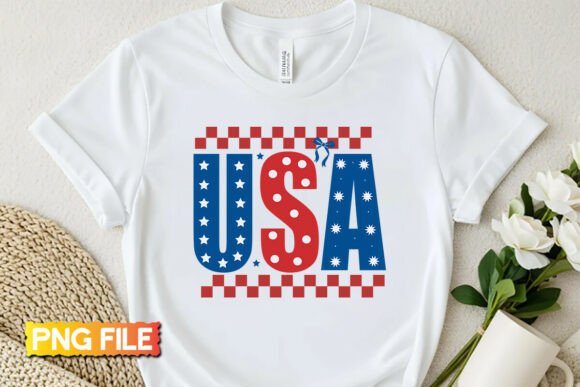
- Small business owners drop it into Canva templates for email headers, Facebook cover photos, or printable “Happy 4th” sale signs — then tweak colors to match their brand (e.g., a blueberry farm using navy + berry-pink ribbons).
- Teachers and homeschoolers import the EPS files into free tools like Inkscape to isolate individual stars or ribbons, turning them into cut-out shapes for paper crafts, laminated word walls (“freedom,” “courage,” “community”), or classroom door decorations that hold up through June heat and humidity.
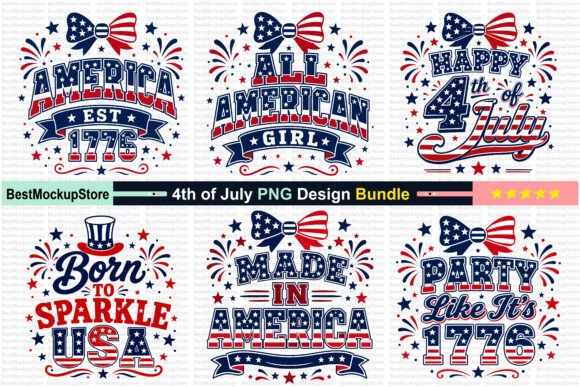
- Bloggers and content creators layer the ribbon elements behind bold typography — pairing “Happy 4th of July” text with flowing blue ribbons and scattered stars — to generate cohesive Pinterest pins, Instagram story graphics, or printable blog opt-in bonuses (like a “Patriotic Recipe Bundle” cover).
- Church groups and PTA organizers adapt the design for handouts, bulletin inserts, or DIY yard signs — resizing the vector cleanly so tiny 3” star icons stay sharp on a 200-person picnic handout, while the full ribbon motif scales beautifully across a 6’x3’ event backdrop.
- Freelance designers use the source files as modular components: pulling a single coiled ribbon to frame a client’s logo, rotating stars to create subtle texture in a background, or combining elements with vintage maps or fireworks vectors for layered, editorial-style layouts.
Why “Editable Vector” Isn’t Just Jargon — It’s Your Time Saver
You don’t need advanced design skills to benefit from the EPS and SVG source files included. If you’ve ever tried to recolor a JPEG logo and ended up with muddy edges or uneven fills — you know the frustration. With Blue 4th of July Ribbon Art, changing colors is one click (or tap, in modern apps). Resizing doesn’t require guesswork — drag it to fill a layout, and the curves stay smooth, the stars stay crisp, the spacing stays balanced.
That flexibility becomes critical when timelines tighten. A local bakery realizes on Tuesday they forgot their 4th display — they open the file, swap ribbons to match their apron colors, add their shop name in a bold sans-serif, and send the file to their print shop by noon. No back-and-forth. No compromises.
What to Consider Before You Use It
Not every festive graphic fits every context — and that’s okay. Before dropping Blue 4th of July Ribbon Art into your project, ask yourself:
- Is the tone right? Its clean lines and confident blue palette lean patriotic-but-polished — ideal for civic events, professional branding, or educational materials. It’s less suited for cartoonish kids’ parties (unless simplified and recolored) or ultra-minimalist luxury brands aiming for restraint.
- Do you need licensing clarity? Since it includes source files and is meant for commercial use, double-check the license terms for redistribution — especially if you’re bundling it into a digital product you plan to sell (e.g., a “Holiday Design Kit” for Etsy).
- What’s your output method? If you’re printing at home on standard inkjet paper, stick with simpler color variations — deep blues and crisp whites reproduce well. For large-format outdoor banners, test how fine ribbon details hold up at extreme sizes; sometimes simplifying layers improves visibility from 10 feet away.
- Are you pairing it with typography? The “Happy 4th of July blue typography with ribbons and stars” variation works best when the font has strong contrast and generous letter spacing. Avoid overly thin or script-heavy fonts that compete with the ribbon’s visual weight.
More Than Decoration — A Tool for Connection
In 2024 and beyond, people aren’t just looking for “4th of July stuff.” They’re looking for ways to express shared values — community, gratitude, continuity — without cliché. Blue 4th of July Ribbon Art supports that intention. When a veteran’s organization uses it to design handwritten thank-you cards, the consistent blue ribbon becomes a quiet symbol of respect. When a school district adapts it for bilingual summer learning packets, the familiar stars and clean layout signal inclusion and accessibility — not just festivity.
And as we move toward the nation’s semiquincentennial in 2026, this kind of adaptable, respectful, high-quality design gains even more relevance. You’re not just making something that looks good for one day — you’re building visual language that honors history while staying useful for years.
So whether you’re prepping for a backyard cookout, launching a limited-time offer, guiding students through a civics unit, or simply wanting to send a card that feels personal instead of generic — start with a vector that gives you room to mean something. Start with Blue 4th of July Ribbon Art.